There’s something oddly fun about turning plain text into strange little symbols. Type a normal sentence into a Wingdings translator, and suddenly your words become arrows, hand signs, clocks, smiley faces, and random icons that look like they came from an old computer mystery game. A lot of people stumble across these tools while designing graphics, making memes, decoding messages, or just messing around online for a few minutes longer than they planned. Let’s uncover How Does a Wingdings Translator turn Text Into Symbols?
If you’ve ever wondered how a Wingdings translator convert text into symbols process actually works, the answer is simpler than it first appears. It’s not magic, encryption, or hidden coding. It’s mostly about font mapping and character replacement. Still, there’s quite a bit going on behind the scenes that makes these translators work smoothly across devices and browsers.
People also use these tools for creative projects, classroom activities, printable crafts, and even themed content for kids. In fact, many websites that offer a wingdings translator also include printable activities where you can get 20+ dinosaur coloring pages alongside fonts and symbol generators. It sounds random at first, but creative resource sites often bundle playful tools together.
Table of Contents
What Is Wingdings?
Wingdings is a symbol-based font created by Microsoft in the early 1990s. Unlike regular fonts that display letters and numbers in different styles, Wingdings replaces alphabet characters with symbols.
For example:
- The letter “A” may appear as a symbol instead of a standard letter
- Numbers can become icons
- Punctuation marks may transform into decorative shapes
The important thing to understand is this: the underlying text usually stays the same. The font simply changes how the characters appear on the screen.
That’s the core idea behind the Wingdings translator turn text into symbols process.
How a Wingdings Translator Actually Works
A Wingdings translator takes normal text input and applies a symbol font mapping to it. Instead of showing standard alphabet characters, the tool displays corresponding Wingdings symbols.
Think of it like putting a costume on text.
The original sentence still exists underneath, but the appearance changes because each character points to a different visual symbol inside the font library.
Here’s a basic example:
| Normal Text | Wingdings Output |
|---|---|
| HELLO | Symbols/icons |
| ABC | Different glyphs |
| 123 | Symbol variations |
The translator relies on character mapping. Every keyboard character has a numerical code. The Wingdings font assigns symbols to those same codes.
So when you type:
A
the computer normally displays the letter A using a standard font like Arial or Times New Roman. But if you switch to Wingdings, the same code now displays a symbol instead.
That’s why a Wingdings translator turn text into symbols tool feels instant. It isn’t rewriting language. It’s swapping visual representations.
The Role of Character Mapping in Wingdings
Character mapping is the backbone of any Wingdings symbol converter.
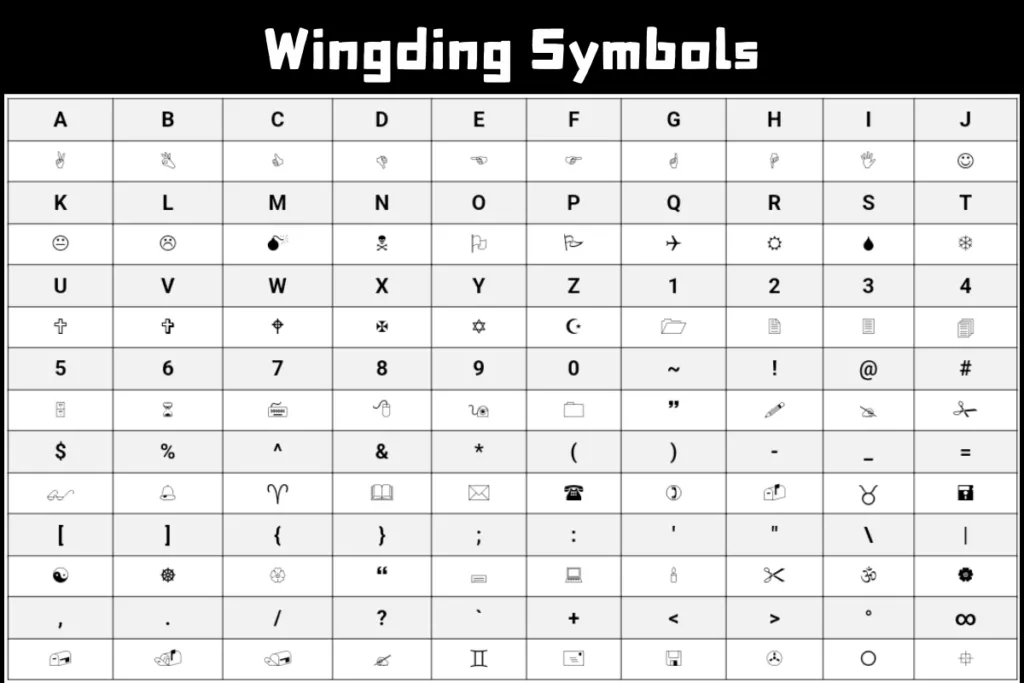
Every digital character has a code behind it. Fonts interpret those codes visually. In standard fonts:
- Code 65 = A
- Code 66 = B
- Code 67 = C
Wingdings reassigns those codes to symbols.
So instead of showing:
- A
- B
- C
you might see:
- ✌
- ☜
- ✈
That’s why people sometimes call Wingdings a symbol font system rather than a language.
This also explains why copying and pasting Wingdings text between platforms can behave strangely. Some devices recognize the font correctly. Others replace unsupported symbols with blank squares or unrelated characters.
Why People Use Wingdings Translators
Honestly, most people aren’t using Wingdings for serious communication. It’s mainly about creativity and visual style.
Here are some common uses:
Social Media Posts
People use symbol text to stand out in captions, bios, and usernames. A few symbols can make plain text feel more playful or mysterious.
Graphic Design
Designers sometimes use Wingdings fonts for icons, decorative bullets, or retro aesthetics.
Puzzle Games and Hidden Messages
Some users enjoy encoding short phrases into symbols for fun challenges.
Classroom Activities
Teachers occasionally use symbol translation tools for decoding games or typing lessons.
Printable Content
Creative websites often pair text tools with crafts, puzzles, or downloadable pages. You’ll even see collections where users can get 20+ dinosaur coloring pages along with font generators and symbol activities for kids.
Difference Between Wingdings and Unicode Symbols
A lot of people confuse Wingdings with Unicode emojis. They look similar sometimes, but they work differently.
Wingdings depends on a specific font.
Unicode symbols are standardized across systems.
That distinction matters.
If someone receives Wingdings text without the proper font installed, the symbols may not display correctly. Unicode symbols, on the other hand, are built into modern operating systems and browsers.
Here’s the simplest way to think about it:
- Wingdings = font-based symbol replacement
- Unicode = universal character standard
A Wingdings translator turn text into symbols tool usually relies on font rendering, while Unicode symbol generators often produce symbols that work more consistently everywhere.
How Online Wingdings Translators Operate
Most online translators follow a simple workflow:
Step 1: User Inputs Text
You type a word, sentence, or phrase into a text box.
Step 2: Character Conversion Begins
The system checks each character individually.
Step 3: Font Mapping Applies
Characters are paired with matching Wingdings glyphs.
Step 4: Symbols Display Instantly
The translated symbols appear in another text field.
Some advanced tools also allow:
- Copy and paste support
- Reverse translation
- Unicode alternatives
- Multiple symbol font options
- Automatic symbol conversion previews
The process feels immediate because the actual conversion is lightweight. It’s mostly text rendering.
Why Wingdings Became So Popular
Part of the appeal comes from nostalgia.
People who used older versions of Microsoft Word probably remember accidentally switching fonts and suddenly seeing weird symbols everywhere. It confused almost everyone at least once.
Then internet culture picked it up.
People started creating hidden messages, conspiracy theories, puzzles, and joke screenshots using Wingdings text translators. Some famous viral posts even claimed certain symbol combinations predicted world events. Most of that was exaggerated internet storytelling, but it definitely made the font more memorable.
There’s also something satisfying about turning normal language into visual symbols instantly. Humans naturally enjoy patterns and icons.
Common Features in a Wingdings Symbol Converter
Most tools include a mix of useful features:
Text to Symbols Generator
Converts letters into symbols instantly.
Reverse Translator
Attempts to decode Wingdings symbols back into readable text.
Multiple Font Modes
Some platforms include:
- Wingdings
- Webdings
- Symbol fonts
- Dingbat variations
Copy Button
Makes it easy to paste symbols into social media or documents.
Mobile Compatibility
Modern tools work on phones and tablets too.
A good Wingdings translator turn text into symbols tool also handles punctuation and spacing correctly. Cheap converters sometimes break formatting, which gets annoying fast.
Is Wingdings a Real Language?
No, not really.
This is one of the biggest misconceptions online.
Wingdings isn’t a secret code or independent language. It’s simply a font encoding system that swaps visible characters for symbols.
You can’t truly “speak” Wingdings because there’s no grammar structure or vocabulary system behind it.
That said, humans are creative. People still invent symbol-based messages using it.
The Technical Side of Font Encoding
Here’s where things get slightly nerdy — but still useful.
Computers store text using encoding systems like ASCII or Unicode. Fonts interpret those stored values visually.
In a normal font:
- Character code 97 displays “a”
In Wingdings:
- Character code 97 may display a symbol instead
That’s why people sometimes describe Wingdings as:
- ASCII to Wingdings conversion
- Unicode symbol conversion
- font character replacement
The actual text data doesn’t necessarily change. Only the displayed glyph changes.
This is a key reason why a Wingdings translator turn text into symbols system works so quickly online.
Pros of Using Wingdings Translators
Creative Expression
Symbol text stands out visually.
Easy to Use
Most tools work instantly without downloads.
Fun for Design Projects
Retro graphics and themed content often use Wingdings fonts.
Good for Attention-Grabbing Text
People notice symbols faster than plain words.
Useful for Educational Activities
Kids often enjoy decoding symbol puzzles.
Cons and Limitations
Poor Readability
Long messages become difficult to understand.
Compatibility Issues
Some devices may not display symbols correctly.
Accessibility Concerns
Screen readers may struggle with symbol-heavy text.
Not Secure Encryption
Wingdings is not a real security method.
A lot of people assume symbol text hides information safely. It doesn’t. Anyone with a reverse translator can usually decode it quickly.
Are Wingdings Translators Safe?
Generally, yes.
Most Wingdings text translators are harmless browser-based tools. They don’t usually require downloads or account creation.
Still, it’s smart to avoid suspicious websites that:
- force software downloads
- trigger pop-ups
- ask for personal data
- redirect aggressively
If you’re just converting text into symbols for fun, a simple web-based translator is enough.
Also, don’t treat Wingdings encoding as privacy protection. It’s visual transformation, not encryption.
Practical Example of Wingdings Conversion
Suppose you type:
HELLO FRIEND
The translator checks each character individually and replaces it with the corresponding symbol glyph from the Wingdings font set.
The output might look decorative, strange, or even unreadable depending on the font version.
What matters is this:
- the underlying character positions remain mapped
- the font changes appearance
- the translation is visual, not linguistic
That’s the real explanation behind how a Wingdings translator turn text into symbols system operates.
Wingdings Fonts and Digital Culture
There’s an interesting reason these fonts survived for decades.
They represent an older era of computing where fonts carried personality. Modern interfaces are cleaner and more standardized. Older systems experimented more with quirky visual communication.
Today, people still search for <a href=”#”>wingdings fonts</a> because they offer:
- retro internet aesthetics
- unusual icons
- nostalgic design elements
- creative formatting tricks
Even meme culture keeps them alive. You still see Wingdings jokes floating around forums and social media every now and then.
Why Some Symbol Converters Feel More Accurate
Not all converters work the same way.
Better tools:
- support multiple Wingdings versions
- preserve spaces correctly
- maintain punctuation
- handle Unicode compatibility
- offer reverse translation
Some low-quality generators simply swap characters randomly, which creates messy outputs that don’t match true Wingdings encoding.
A proper Wingdings encoder follows actual font mapping tables.
Final Thoughts
The reason a Wingdings translator turn text into symbols tool feels interesting is because it blends language, design, and nostalgia into one tiny interaction. You type normal words, and seconds later they become visual symbols that almost look like a secret code.
Underneath the mystery, though, the system is pretty straightforward. Wingdings works through character mapping and font replacement. The translator doesn’t invent new language structures. It changes how existing text appears by assigning symbols to standard character codes.
That simplicity is probably why Wingdings never completely disappeared. It’s easy to use, visually strange, and oddly entertaining. One minute you’re testing random phrases, and the next you’re browsing printable crafts, symbol puzzles, or sites where you can grab 20+ dinosaur coloring pages alongside text generators and retro fonts. And honestly, that mix of curiosity and randomness is part of the fun.