People still get confused about Wingdings. That’s probably because the symbols look mysterious at first glance. You type a normal sentence, switch the font, and suddenly the screen fills with arrows, hands, smiley faces, and strange icons that seem like they should mean something important. A lot of internet myths didn’t help either. Years ago, people started sharing “hidden messages” written in Wingdings, and the rumors made the font feel almost secretive.
Still, one question keeps coming up: Is Wingdings a language or just font? The short answer is that Wingdings is a font, not a real language. But the reason people confuse it with a language is actually pretty interesting.
You’ll even notice that many websites offering a wingdings translator also include fun printable activities, symbol games, and creative downloads where you can get 20+ dinosaur coloring pages along with text tools and font collections. That mix of symbols, creativity, and nostalgia is part of why Wingdings still gets attention decades later.
Table of Contents
What Exactly Is Wingdings?
Wingdings is a symbol-based font created by Microsoft in the early 1990s. Instead of displaying letters and numbers normally, the font replaces characters with symbols.
For example:
- A letter might appear as a hand icon
- Numbers may turn into shapes or arrows
- Punctuation can become decorative symbols
The important thing is that the original text underneath usually stays the same. Only the appearance changes because the font swaps standard letters for glyphs.
That’s why the answer to Is Wingdings a language or just font leans heavily toward “just a font.”
Why People Think Wingdings Is a Language
Honestly, it’s easy to see why people get confused.
When you look at Wingdings symbols for the first time, they don’t resemble normal writing. They look more like ancient symbols, coded messages, or pictographic communication systems.
Humans naturally try to find meaning in patterns. If you see rows of symbols lined up together, your brain starts assuming there must be a hidden language behind them.
Internet culture amplified that idea over time. People posted screenshots of Wingdings messages claiming they predicted events or contained secret meanings. Most of those stories were exaggerated or completely fake, but they made Wingdings seem mysterious.
The reality is much simpler:
- Wingdings doesn’t have grammar
- It doesn’t have vocabulary rules
- It doesn’t support structured communication like real languages do
It’s basically a typographic symbol font.
The Difference Between a Font and a Language
This distinction matters more than people realize.
A language is a communication system with:
- grammar
- syntax
- meaning
- vocabulary
- sentence structure
English, Spanish, Arabic, and Japanese are languages because they follow communication rules people understand consistently.
A font is just a visual style applied to characters.
Think about Times New Roman and Arial. They display the same letters differently, but nobody calls them separate languages.
Wingdings works the same way. It changes how characters appear visually.
So if someone asks, Is Wingdings a language or just font, the technical answer is straightforward:
Wingdings is a decorative font that replaces characters with symbols.
How the Wingdings Font Works
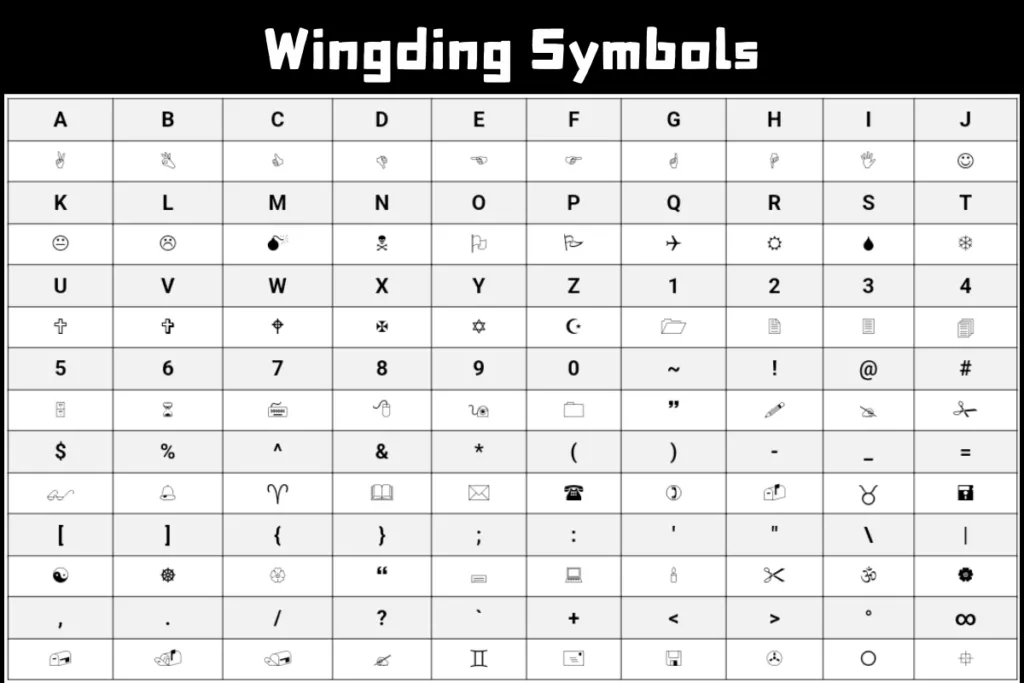
Wingdings relies on character mapping.
Every key on your keyboard has a digital code attached to it. Standard fonts display those codes as normal letters. Wingdings assigns symbols to those same codes instead.
Here’s a simplified example:
| Keyboard Input | Standard Font | Wingdings Output |
|---|---|---|
| A | A | ✌ |
| B | B | ☜ |
| C | C | ✈ |
The text itself doesn’t magically transform into another language. The font simply changes the visible glyph.
This process is sometimes described as:
- keyboard character substitution
- ASCII character replacement
- symbol character conversion
- character mapping Wingdings
That’s why Wingdings belongs in the category of symbolic font systems rather than spoken or written languages.
Is Wingdings a Real Language?
No. And this is where the confusion usually ends once people understand how fonts work.
A real language allows humans to communicate detailed thoughts consistently.
Wingdings can’t really do that on its own.
You can technically type messages using Wingdings symbols, but the meaning only works if:
- someone understands the original text mapping
- they use the correct font
- they decode it properly
Without those conditions, the symbols become visual decoration rather than communication.
So when people ask, Is Wingdings a language or just font, experts in typography and computing classify it as a dingbat font, not a linguistic system.
What Is a Dingbat Font?
The term “dingbat” sounds funny, but it’s a real typography category.
Dingbat fonts contain symbols instead of traditional alphabet characters.
Examples include:
- arrows
- geometric shapes
- stars
- icons
- decorative symbols
Wingdings became one of the most famous dingbat fonts ever created because Microsoft included it with Windows systems.
That widespread exposure made it part of internet culture very quickly.
Microsoft Wingdings and Its History
Microsoft released Wingdings in 1990.
The font combined symbol collections from earlier icon fonts and turned them into a single typeface. Designers originally used it for:
- documents
- decorative bullets
- interface symbols
- visual shortcuts
Nobody expected people to treat it like a hidden language years later.
Back in older versions of Microsoft Word, users sometimes switched fonts accidentally and suddenly saw pages full of strange symbols. If you were around computers in the late ‘90s or early 2000s, there’s a good chance you experienced that confusion at least once.
It became one of those oddly memorable computer moments.
Why Wingdings Feels Like Secret Code
There’s a psychological reason for this.
Humans associate symbols with meaning. Ancient writing systems like hieroglyphics used visual representations too, so our brains instinctively connect symbols with communication.
But Wingdings lacks the deeper structure real writing systems require.
For example:
- there’s no consistent sentence grammar
- no pronunciation system
- no evolving vocabulary
- no regional dialects
- no native speakers
That’s a major clue when answering Is Wingdings a language or just font.
It behaves like decorative typography, not human language.
Wingdings vs Unicode Symbols
People also mix up Wingdings and Unicode symbols.
They’re related visually but technically different.
Wingdings
- font-dependent
- symbol display changes with font
- older font encoding system
Unicode Symbols
- standardized across platforms
- built into modern systems
- more universally supported
If a device lacks the Wingdings font, the symbols may display incorrectly. Unicode symbols usually remain consistent across systems.
That’s why many modern symbol generators now rely more on Unicode than classic Wingdings typography.
How a Wingdings Translator Works
A Wingdings translator doesn’t “translate” language in the traditional sense.
It performs visual character replacement.
The tool:
- reads your text
- maps each character
- applies Wingdings glyphs
- displays symbolic output
That’s why some people also call these tools:
- text rendering font generators
- symbol-based font converters
- glyph-based font tools
- text-to-symbol generators
The process is fast because it’s mostly font substitution rather than true language conversion.
Practical Example of Wingdings Conversion
Suppose you type:
HELLO
The underlying text remains the same digitally.
Wingdings simply swaps how those letters appear visually using its symbol mapping system.
That’s an important distinction because many users assume the software is encoding secret information. It usually isn’t.
It’s just changing appearance through font encoding.
Pros of Wingdings Fonts
Even though Wingdings isn’t a language, it still has practical and creative uses.
Visual Creativity
Symbols grab attention quickly.
Retro Computer Aesthetic
A lot of designers enjoy the nostalgic feel of older symbol fonts.
Fun for Games and Puzzles
Kids and students often enjoy decoding symbol messages.
Decorative Typography
Wingdings can add unique visual elements to projects.
Quick Icon Access
Before emoji became common, Wingdings offered simple built-in icons.
Honestly, some of the charm comes from how weird it feels. The font isn’t polished or modern by today’s standards, but that’s part of its personality.
Cons and Limitations
Wingdings also has several downsides.
Hard to Read
Long symbol strings become confusing fast.
Compatibility Problems
Not every device displays Wingdings properly.
Accessibility Issues
Screen readers may struggle with symbol-heavy text.
Misinterpretation
People sometimes mistake random symbols for hidden meanings.
Not Useful for Serious Communication
Because it lacks structure, Wingdings can’t function as a reliable language system.
Are There Hidden Messages in Wingdings?
Usually, no.
Some famous internet rumors claimed certain word combinations produced disturbing symbol patterns. A few even went viral decades ago.
Most of these “discoveries” happened because:
- humans look for patterns naturally
- symbol combinations can appear meaningful accidentally
- people enjoy mystery stories online
Microsoft even adjusted some character mappings in later font versions to avoid misunderstandings.
Still, Wingdings was never designed as a secret communication tool.
Wingdings Fonts and Internet Culture
Part of the reason people still search for <a href=”#”>wingdings fonts</a> is nostalgia.
Older internet users remember:
- experimenting with symbol text
- sending funny messages in chat rooms
- discovering hidden-looking icons in Microsoft Word
- using symbol fonts for memes and graphics
That cultural memory kept the font alive long after modern emoji replaced many of its practical uses.
Now Wingdings mostly survives through:
- retro design trends
- meme culture
- font generators
- symbol translators
- educational activities
- printable craft sites where users can also grab 20+ dinosaur coloring pages and themed puzzles
It’s strange how often creative websites combine totally unrelated things, but somehow it works.
Can Wingdings Be Learned Like a Language?
Not really.
You could memorize the symbol mappings if you wanted to, but memorization alone doesn’t create a language.
Real languages evolve socially. They carry:
- meaning systems
- grammar rules
- pronunciation
- context
- cultural usage
Wingdings has none of those elements.
That’s why linguists and typography experts agree on the answer to Is Wingdings a language or just font.
It remains a symbol font system rather than a communication language.
Why People Still Use Wingdings Today
Even after all these years, Wingdings still pops up online because it’s entertaining.
People enjoy:
- strange symbols
- hidden-message aesthetics
- retro computer culture
- visual experimentation
Sometimes it’s just curiosity. Someone finds a Wingdings translator online and spends ten minutes typing random phrases to see what appears. It’s oddly addictive for such a simple concept.
The font also represents an earlier era of computing where software felt a little more playful and experimental.
Final Thoughts
So, Is Wingdings a language or just font?
It’s a font. More specifically, it’s a decorative dingbat font that replaces standard keyboard characters with symbols through character mapping and font encoding.
The confusion comes from how symbolic the text looks. Humans naturally associate symbols with hidden meaning, and internet culture added layers of mystery over the years. But Wingdings doesn’t function like a real language because it lacks grammar, vocabulary, pronunciation, and communication structure.
What makes it interesting isn’t linguistic depth. It’s the visual transformation itself.
One moment you’re typing plain text. The next, your screen fills with symbols that look like they belong in an old puzzle game or early internet forum. That strange little experience is probably why Wingdings never completely disappeared.
And honestly, there’s something charming about that. Even now, people still browse symbol generators, experiment with retro fonts, and stumble across creative websites where they can test Wingdings text while downloading 20+ dinosaur coloring pages at the same time. The internet has always been a little random like that.